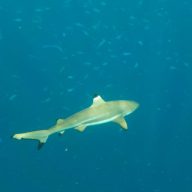
My old friend Nick and I have just had our first snorkel of the season in our beloved Gordon’s Bay. We’ve shared the space with groupers there for years. He and his wife were married at Clovelly and my wedding gift to them was a framed picture I had taken of Bluey, the giant grouper, in Gordon’s Bay.
We arrived at around 8.30am this morning to find a lone snorkeler exiting the water. He was dripping in Zen and told us if we quieted our minds the grouper would come to us. It was great to see someone else walking peacefully away from the experience we were just about to have. Quiet minds or not, they did come to us and we shared the bay with them.
The water was incredibly clear, refreshing and invigorating. My friend Rani and I always call a swim in the ocean ‘a blessing’. It is a blessing in that we are so grateful to have access to such a beautiful place but it is also a blessing in that the ocean creatures who live there bless us with their presence.
Nick and I were truly blessed this morning. One of the smaller blue groupers was the first I saw. He had his mouth wide open and was getting a good clean of his ridiculously white teeth from the tiny fish darting around his mouth. In 17 years of snorkelling a Gordon’s Bay, this was the first time I had seen one at a cleaning station in full swing.
The next was Bluey, a massive blue grouper who hung with us in about 6 feet of water. The three of us just hovered together in silence. He and we swayed together, making eye contact, as his eyes looked us up and down. Now and then he would change the direction he was facing looking at us and the direction of our bodies. He was waiting for us to kick him up a sea urchin but we just floated together. We were becoming together as Donna Haraway would say. My encounters with groupers are always a blessing for me and today was no different.
In the midst of lots of reading, it has become even more apparent how abysmally we treat the animals of the sea. And so these encounters are becoming even more sacred to me as the years pass.
As Nick and I were sitting on the rocks in the after glow, a kayak fisherman paddled up into the landing in the bay with two fishing rods in position. My heart sank as it always does at the sight of any fishing gear so I scurried over to him before he left. He was an amiable Englishman who informed me he had hooked a few pike but they had all snapped his lines. I had just been reading David A. Fennell’s work on fish pain and sentience and had learned that 43% of all hooked fish die after release sometimes as long as a week later. Those few pike were swimming around with hooks in their mouths, gills and gullets and would suffer and then be eaten by other fish who would suffer the same and so on and so on and so on. The cycle of suffering is immense and almost endless from one single fisherman.
I remember being at Bawley’s Point about 8 years back and finding a massive Australian Fur Seal washed up on the rocks. Its mouth was frozen in a horrific death mask grimace full of a large jumble of recreational fishing gear. The hooks and lures were protruding through its cheeks and lips exposing its teeth. It had died a long excruciating and cruel death at the hands of recreational fishermen. I find it much harder to share space with fishermen than with fish.
Last summer, my friend Pamela, her friend Steven and I went snorkelling at La Perouse. This was one of my favourite spots in my early days of snorkelling. Instead of the pristine oasis I recalled, we were greeted with garbage – everywhere. There were used sanitary pads floating in the water and no fish in sight. There were however more fishermen than we could count. As we were entering the water a large group of Korean spearfishermen were also coming in. My friend Pamela asked them to put their spear guns away while we snorkelled for safety reasons. They obliged. We saw absolutely nothing; lots and lots of algae and garbage and murky water but no fish. We eventually made our way under the bridge at Bare Island when a large shadow appeared. We looked up and saw a couple in a small dinghy with 4 fishing rods. “See any fish?” the woman asked us as we bobbed out of their way. “No” Pamela answered, “You caught them all.” She wasn’t kidding. I saw a single juvenile leatherjacket under the bridge just after that encounter and I’m sure it didn’t last the day.
As Nick and I talked about the ocean this morning he recounted an incident with his 6-year-old daughter Kristin. He was cooking fish for supper and asked her if she’d like some. “No” she said, “I only like fish in the sea.”
Amen to that Kristin.
What a blessing.
Round and Round
Yesterday’s Melbourne Cup double tragedy of the two horses Admire Rakti and Araldo have underlined the complete absence of respect and care of animals when they have been commodified and ‘put in the bank’.
The footage on ABC’s Lateline last night was disturbing to say the least. We see Admire Ratki in the stall, head low and quivering while hearing a woman’s voice off camera yelling, ‘get the vet, get the vet!’ And as the horse collapses she can be heard saying, “he’s going to die!” Meanwhile the Japanese team members are seen pulling savagely on the dying horse’s bridle trying to make him stand up as he dies. They are seeing the death of their millions of investment dollars.
When the live export debate finally ignited a few years ago, people were rightly horrified to see the cruel and barbaric overseas treatment of sheep and cattle in abattoirs and yet here we are, in Australia at the major event of the year seeing the same treatment.
When an animal becomes a commodity, something that can be invested in, traded and exchanged, it is put in the bank. It becomes a thing; not a living animal but an investment. It becomes an amount, a faceless, nameless, non-sentient amount of money.
125 racing horses have died this year in similar ways. These animals are overworked and their labour is an investment and an entertainment that is worth many millions of dollars worldwide. The final moments of Admire Ratki’s life show us quite clearly how that labour is rewarded. In his short 7-year life, there does not seem to have been much of a reward for his labour. These animals are on a leash and their agency is limited to what they can achieve for their investors through being walloped violently while running at full speed. They are in the bank as they are seen as a monetary investment and they are on a pedestal as long as they fufill the needs this human construct has put upon them.
Animal labour has existed for as long as humans have been able to harness it, literally. Animals are used to pull our wagons, plough our fields, transport us and entertain us. Their labour is a multi-billion dollar slave trade the whole planet engages in.
Zoos, wildlife parks and aquariums are also examples of this as are wild animals in dolphin and shark swims. The tragic example of Tilikum the orca in captivity featured in the documentary Blackfish (2013) reminds us of the horror of sentient animals who are put on a leash, in the bank and on a pedestal. When Tilikum enacted his agency and refused to continue to be on a leash, 3 people died and yet the animal remains in miserable circumstances in a marine park despite providing years of service and siring 31 calves for the marine park industry. He is a living sperm bank and a spectacle. A lack of respectful affordances and etiquette when dealing with animals is demeaning to these animals and to us. It diminishes our joint capacities of becoming together. Just because we can do these things to animals, doesn’t mean we should. We can all do better.
For the sake of the lives of Admire Rakti, Araldo and Tilikum, let’s hope we do.
What We Do With Animal Intelligence
Kanzi and the Animal Mind
A few weeks back a group of old friends and I gathered for a pub lunch. As animal lovers and human guardians of rescue bunnies, dogs, cats, birds and fish, we relish chances to talk about our world with animals and they enjoy surveying the newest scars inflicted on my arms by my cat Rufus.
I mentioned to them a vintage Time Magazine article that I had recently read. The issue was published August 16, 2010 and the cover reads “What Animals Think”. The article inside is written by Jeffrey Kluger and it fascinated and terrified me at the same time. I told my friends an anecdote from the article about a male bonobo named Kanzi who had been raised in a lab and taught English words, 384 of them so far. From his lab home at the Great Ape Trust in Des Moines, Iowa he describes his life with great acuteness.
Here is the quote from the article than stunned my friends and I:
When he tried kale he named it slow lettuce because it takes longer to chew than lettuce.
Just think about that for a moment. This is an animal that has concepts of time and similarity of foods and is able to express it to us in our own language! Imagine all the other things animals feel, know and believe yet don’t express to us in a way we can understand. I will never again call kale by its name; it will be known as slow lettuce from now on as far as I am concerned. When I told my friends this at the table, a few of them had the same reaction I did when I first read it, sheer horror at what we do to animals and how little we acknowledge their intellect. One of my friends’ faces fell and she sat open mouthed at the prospect.
Another quote reads:
It takes me a while to find the ball in an office down the hall, and when I finally return, Savage-Rumbaugh verbally asks Kanzi, ‘Are you ready to play?’ He looks at us balefully. ‘Past ready’, he pecks.
Yikes. Finally, some truth is being shown and told about animal intelligence but only after millennia of mistreatment; talk about shoot first, ask questions later.
How we finally acknowledge this truth and deal with it will be the deciding factor. We now know that animals feel, know, dream, mourn…they have intellect and we share this planet with them. Will we go forward well with this knowledge or will we do as we have with say, fossil fuels and climate change…we are aware of the consequences but they are here to use and we can use them so we should. It is still early to tell but as the article was written in 2010, I don’t know how well we have gone forward in those 4 years.
When I was 14 my beloved dog Sheeba had three puppies. One of the puppies, Ebony, went to live with my aunt and uncle and Sheeba and Ebony spent every weekend together at the cottage and both grew to ripe old ages together. While watching Sheeba and Ebony romp around one day, my best friend Annie innocently asked, “Do you think they know?” We all burst into gales of laughter as my family loved Annie’s unusual way of looking at the world, but on hindsight, her question was a profound one. We all assumed that yes; both dogs knew they were mother and daughter. Sheeba’s memory of the birth must have been present in her consciousness. Their sense of each other’s scent would have been constant throughout their lives. They had to have known. How could they not? But Annie’s question was deeper than that. She wanted to know that they knew.
I have never had any doubt of animal intellect or emotion. Having grown up in an extended family full of animals who were often shared between us, I could see first hand how they remembered us and their different feelings toward us. My cousin’s dog clearly remembered me after 8 years absence and cried with joy for an extended period and an exposed tummy for a rub. My brother’s dog does the same when I return to Canada often accompanied by urination.
Our beloved Sheeba had an extremely close relationship with our elderly next-door neighbours; it was such a close bond, this elderly couple thought of Sheeba as their child. One night as my mother and I were sleeping, we were awoken by an unnaturally high-pitched scream, like a living siren. We awoke to find Sheeba at the end of the bed with her nose pointed to the ceiling in a howl of anguish. It was such an awful sound; we weren’t sure what was happening. I touched her with my foot and she stopped as if woken from a bad dream, licked her lips slowly and curled back up to sleep. The next day we were told that our neighbour Pat had died the night before at the same time Sheeba had let out her anguished cry. My dog was in grief and mourning; of this I have no doubt.
When my very co-dependant cat Rufus is separated from me, his distress is apparent and unfortunately in a very unhealthy way, shared by me. Trips to the vet are fine in the taxi, he enjoys the car ride. He is even fine in the waiting room but the second he is alone with the vet, things change for the worse. When I have to travel overseas and some poor person has to care of him, things get even worse.
Three years ago when I had a couple stay in my flat to take care of Rufus, I stayed with a friend for a few weeks before my trip so Rufus could adjust to this new couple in his home. Things were going poorly so I went back to the flat to see him and try to calm him down. That night while lying in bed I talked to him in my mind, reassuring him that they were nice people who were going to feed him and play with him and take care of him and that he should give them a chance. A few days later the woman in the couple rang me and said that my visit had ‘flicked a switch’ and that Rufus was calm and was no longer hissing and ambushing them and had even slept on the end of the bed with them.
I realise this is all sounding a bit airy-fairy dipped in patchouli and lit up with crystals but the simple fact is people who are animal guardians do have strong emotional bonds with their animals and this is only possible because animals have strong emotional bonds with us. They are sentient beings and to assume that they are somehow lesser or don’t feel things to the same extent we do diminishes both them and us.
This should be the jumping off point for further discussions on animals and us…not whether they feel, but what they do feel and how we respond to that knowledge and those feelings.
Just Because We Can Doesn’t Mean We Should
The rate of human-centred progress over the last 50 years has been astounding. Capitalist forces, globalisation and the global village mentality (where white middle aged male CEOs and male war lords, sheiks and organised crime bosses re the chiefs of the village of course) have all enabled a no-limits mentality of choice. We in the wealthy countries can have almost anything we want when we want it. A 12-year-old virgin bride, no problem. A third world surrogate to have your child, done. A lion or tiger or elephant trophy for your great room, easy. Just because we can do these things doesn’t mean we should. The problem is we think we should because we can.
The idea of ethics and morals has all but vanished from the discussion. Our discussions of choices have all been justified through a capitalist construct that leaves a moral and ethical vacuum allowing justification of our choices: This girl was promised to me as a bride, therefore I own her. I paid good money to this woman to carry our children; she was fairly paid for her services. My canned-hunting trip benefitted the poor African village so now they can send their kids to school.
The treatment of animals has fallen into this vacuum with terrible consequences. Animals are consumed on every level as food, labour and experience and rarely does the question of what we ‘ought’ to be doing in regards to animals come up. We kill sharks to make our beaches safer for beach goers because we can hire people to do it. We eat shark fin and consume shark products because they are readily available in a simple commercial transaction at your local Chinese restaurant or chemist right here in Sydney. We go on baited shark dives because the tourism industry allows and profits from it.
While our personal moral framework allows us to decide not to participate in these activities, the social ethical framework is not enacted to prevent these options being present in the first place.
David A. Fennell’s book, Tourism and Animal Ethics (2012), gives an insight into this idea on page 12:
Saul (2001) argues that ethics is the most demanding of our human qualities and this can be discernable on two basic fronts. First, our capacity to be moral is contingent upon the will to resist the vast spectrum of human needs, wants and desires that we must have at any cost the recognition that we cannot have whatever we want at any price (Preece, 2005). Second, because morality can be taken to culturally derived extremes, it must be rooted in everyday life. In order for ethics to have utility, it needs to be exercised regularly – not unlike the muscles of the body that, if not exercised will atrophy and be of less use. How can we claim to be inclusive of thought in tourism if we are only now beginning to ask questions that have moral significance? And how is it that we can take pleasure in our touristic pursuits if they come at a cost to others? The pleasure principle continues to prevail in this field of practice, with little resistance from the philosophical domain. This statement, bold as it may seem, continues to hold weight.
My grandmother was a very cherished part of my family. She suffered from extreme osteo and rheumatoid arthritis from her late 40s until her death at 91. She was in extreme pain for the majority of her life and tried various remedies including cortisol, gold injections and finally shark cartilage. When she started using it, I was in my early 20s and remember feeling dismayed. My aunt admonished me harshly and questioned how dare I think of it as wrong and how could I possibly question any form of remedy for my grandmother. But I did question it and still do. I loved my grandmother very much but just because she had the option to use this possible remedy which might work (it did not) I didn’t think she should. I think these questions should always be at the forefront of these situations, not a possible footnote to the discussion after it has occurred.
The situation of shoot first and ask questions later is literally happening everywhere, especially in the recent WA shark cull. Many sharks were killed before the discussion even happened.
Our new technologically driven consumer mentality is not allowing time and space for these discussions to take place. Thankfully, this same technology enabled the mobilisation of many people to quickly spread the word of the shark cull and get the discussion into the public domain which allowed an end to the cull.
The question needs to come first. In terms of tourism in general, this question is rarely asked. Many of my friends and colleagues are travel junkies. They are in races with each other to see the most countries before they die. My discussions with them are often heated as the pleasure principle rules this domain and any questioning of it seems blasphemous. Should we travel to places to see sharks teased mercilessly with bait they rarely get to eat, to see sharks put into tonic immobility and treated as circus animals in their own domain? We feel we should do these things because we can. These options are laid out in front of us like a cornucopia of experience. Just because we can doesn’t mean we should.
This is not what democracy looks like
In a supposedly democratic society, why are the Australian governments catching and killing sharks when the overwhelming majority of the population are against it? Why are the governments allowing themselves permission to kill an endangered and thus protected species?
The voice of the people is not being heard and the media continues to use biased, incorrect and sensationalist language to will-fully insight irrational fear. It is time for a sane, informed and rational discussion on the issue of sharks.
Governments and policy makers don’t have to like sharks nor do they have to ignore the distress bathers and their loved ones go through when one of them is injured or killed in a shark bite accident. The only thing governments need to do is stop killing them and do their utmost to protect them as is their duty under CITES and international law. 
This is a photo of one of the two great white sharks killed in response to the bite incident. The second has apparently been sent to Perth where ‘the fisheries department will conduct research on it, then it will be killed’. Fisheries and the media have both confirmed that ‘there is no way of knowing if either of the sharks are the one responsible’. This certainly begs the question of why were they killed?
Even if they did know it was the shark, it is not going to bring the surfers hands back. Worldwide data has shown that shark culling in the aftermath of a bite incident has no effect on deterring future attacks. And by fisheries stating there is no way of knowing if either shark was responsible, this shows it was simply an act of revenge and one the public and scientists have stated loud and clear is unnecessary and not wanted. It is time for sanity and democracy to make itself known.
Q and A and Insight
Just when we thought the Western Australian government had finally come to its senses and had listened at last to expert, scientific advice from marine scientists all around the world to finally end their shark cull, they do a backflip of monumental proportions.
Disregarding all scientific proof that there is no such thing as a shark who develops a taste for human flesh and thus stakes out a beach as its feeding ground, the Western Australian government with the cooperation of Environment Minister Greg Hunt have killed two protected Great White Sharks as a response to a shark bite incident near Esperance this week.
After catching one of the sharks, reportedly a 3m Great White Shark, fisheries had to wait several hours for permission from the Federal Government to kill it. This was a cruel and inhumane act legislated by the governments of this country.
Why are the governments of this country lagging so profoundly behind other countries in regards to species protection and marine conservation? Why is the incorrect and loaded language of ‘Shark Attack’ still being used? Why are the media using language such as ‘Shark rips surfers arms off” when the shark bit the surfers arms?
Why do the media insist on this throwback to the 1970s?
Why are our governments legislating in favour of the slaughter of protected species and why does Australia lead the world in endangered animals?
These discussions need to be happening in our media. Q and A and Insight need to start engaging with the public and scientists and scholars about these real issues facing ALL of us on this planet. The government representatives legislating these policies on our behalf are not being held accountable because they are not facing their constituents in real time debates on these issues. Greg Hunt and Colin Barnett need to front up and face up to the public’s reaction to their policies.
Let’s ask Q and A and Insight to broaden their focus to environmental and conservation issues so the public can get a more balanced and realistic view of the situation rather than the blood soaked headlines the media usually dishes out.
Horror and Terror and the Better of Us
Horror and Terror and The Better of Us
Sharks and the idea of being bitten or especially eaten by one is an irrational fear many people have. We eat animals by the tonne but the idea of them being able to eat us is now such a distant possibility that the notion is loaded with more horror than ever.
“…non-human animals can be our food, but we can never be their food….Horror movies and stories reflect this deep-seated dread of becoming food for other forms of life: horror is the wormy corpse, vampires sucking blood and sci-fi monsters trying to eat humans (“Alien 1 and 2”). Horror and outrage usually greet stories of other species eating live or dead humans, and various levels of hysteria our nibbling by leeches, sandflies, and mosquitoes.”
Val Plumwood sums up the idea of them and us in Animals and Ecology: Towards a Better Integration (2003). Sharks have been linked to horror since humans first discovered them. Countless films and stories back up this deep-seated fear and the media continues to beat the terror drum.
From the Christians in the Colosseum being thrown to the lions to James Bond and his many (but always) victorious confrontations with sharks, snakes, spiders and other animals under the control of his enemy, sharks have been an effective tool of terror. And who can forget Robert Shaw’s incredible monologue on the sinking of the USS Indianapolis in Jaws. The idea of being in the water surrounded by sharks who pick you off one by one as you watch your friends die helplessly is by far the most effective scene in the film – no special effects or mechanical sharks needed – just the power of imagination and a fictional account of a real event where ‘nature won’.
Shaw’s character Quint is in a constant state of rage throughout the film that this shark could possibly get the better of him just as Ahab was about the white whale. Human literatures are rife with the idea that humans are masters and any inversion of this notion causes rage. The Australian governments’ shark culling program is a perfect example, and we know how that ends. The last Tasmanian tiger died in Hobart Zoo on 7 September 1936, the last known thylacine.
The use of sharks as a tool of terror is not just a modern-day media phenomena. It has been well documented in the slave trade. According to Marcus Rediker, History from below the water line: Sharks and the Atlantic Slave Trade (2008), the sharks were both the best friend and the enemy of the slave ship captains. “’Sharks’ would thus take its place in the lexicon of class description, a cant term signifying a worthless fellow who made a living by his wits, sponging, swindling, cheating and scamming. Sailors might invert the class meaning by saying of sharks, ‘we call them Sea Lawyers.’”
The slave ship captains used the fear of throwing disruptive slaves overboard to the sharks as a form of control and they used the sharks to dispose of the sick and dead bodies of the infirm by throwing them overboard and making the other slaves watch. “It comes as no surprise that a collective grouping of sharks is known as a ‘shiver’” (Rediker 2008).
How dare an animal get the better of us? Don’t they know who we are? This seems to be the underlying message here. As Plumwood states, “Being food for other animals shakes our image of human mastery.”
We cringe at the idea of cowering in a cave trying to fend off lions and tigers and bears, oh my! We cannot bide the idea that we have not moved beyond our primitive ancestors who often had to compete with other animals for food and also had to defend themselves in order not to become food. This idea is so foreign to most of us today – it plays in our minds like a comedy instead of the tragedy it is.
Plumwood points out that human predation of animals is usually based in culture, whereas animal predation on humans is based in nature. Our ability or even desire to eat animals is based in culture and quite often cruelty. Oysters are alive when the lemon is squirted on them, ducks are force-fed to enlarge their livers, marine turtles are placed on large fires to be cooked alive and sharks are finned alive. Plumwood came very close to being food for a crocodile in Kakadu many years ago when she was grabbed and rolled three times before escaping to safety albeit with bad injuries. She recounts the feeling of being watched by eyes unknown and of the knowledge that she had been preyed upon, that she was prey.
When a shark or other predators prey on us, there is no cruelty involved, thus no culture. It is usually swift, to avoid the animal expending much needed energy, and thus humane (in a strange inversion of the term). Sharks don’t ‘play’ with their food as so many marine mammals do. They don’t toss them about like frisbies or torment them. Cruelty is a uniquely mammalian trait. Sharks bite and then eat.
The idea of cruelty is so engrained in the human consumption of animals and has been for so long it is difficult to separate it. We have been shown what we do to animals and most of us don’t like it. Many reject the idea of factory farming live animals; battery hens, foie gras duck liver, veal, live seafood…the (usually urban) marketplace consumer is often reflecting public sentiment and supermarket chains are beginning to listen and respond with more responsibly sourced products.
This is happening more because the chasm between us and the animals who become our food is thankfully being shortened and we are becoming more aware of what is happening to animals who become our food before we eat them – they are being brought closer to us and so is their pain and suffering.
However, out on the shimmering horizon where wilderness and nature live, particularly marine animals, the public is not always aware of what is happening to these animals we share the planet with. And when people are aware and sound their disapproval, their voice is often not being heard.
Case in point is the shark culling in Australia where the majority of the public oppose any killing of sharks and yet the governments of NSW, Queensland and WA continue on this path of slaughter at a very high environmental and financial cost.
According to Leah Gibbs & Andrew Warren in Killing Sharks: cultures and politics of encounter and the sea (2014), the $6.85 million dollar WA Shark Hazard Mitigation Strategy was not preceded by an impact study, and as we know, the science shows that culling provides absolutely no reduction in bite incidents. In addition, “The lethal approach taken to shark management is a knee-jerk reaction rather than informed, effective environmental policy making.” As Gibbs and Warren discovered, “UMR Research found that 82% of Australians think that sharks should not be killed and that people enter the water at their own risk (SMH 2014).
How can the governments of a democratic country be so disconnected from their electorate? Why are they so hell-bent on offering us protection from animals we do not want or need protection from? Yes, sharks are predatory animals who live in the ocean and 82% of us are willing to take the risk of encountering them when we enter the ocean. Beaches have become human realms and as such humans have forgotten that they are in fact wilderness with wild animals inhabiting them. A re-framing of these spaces is needed.
We need reminding that beaches are not pools; they are the homes of others and are wild places. They are places where we may be preyed upon and where we may become food for other animals. The literal line in the sand where the surf meets the land is a time line and when we cross over it, we are going back in time – 400 million years back in time to a realm where creatures (hopefully still beyond our control) have evolved and lived long before us and without us.
The horror and terror we are entangled in with sharks is mostly coming from the human side of the entanglement. 100 million sharks slaughtered in a year when there were less than 10 humans fatally bitten by sharks is the true terror and horror we are dealing with.
We Need to Talk About Shark Week
We Need to Talk About Shark Week
Yes, it is that time of year again, Shark Week; the Discovery Channel’s annual week of all things shark. Growing up in Canada, I was in my late teens when Shark Week began in 1987 and I looked forward to it as much as Halloween, Christmas and my birthday. My Dad and I would be riveted to the TV and we would inevitably learn something new about sharks each year. Even though they often repeated the same documentaries, there was usually something new and the old documentaries were so good, we looked forward to watching them again.
I don’t have pay TV here so I haven’t seen Shark Week for many years. I was home in Canada a few years back and caught some of it and I was shocked by the difference in tone. I remember Shark Week as being very educational with interviews with ichthyologists and marine biologists and oceanographers. What I saw a few years ago were staged re-enactments of shark attacks complete with buckets of red dye in the water and screaming people in the surf. What had happened to my beloved week of shark television?
The chatter online seems to agree with me. The programme seems to have lost its educational and entertaining edge and has instead lowered itself to a shark version of Current Affair-style infotainment complete with speculative editorialising, vilification and scaremongering. It’s not that Shark Week has become anti-shark, it’s that it has become pro-fear.
Shark Week needs to get itself back on track or risk tarnishing its 27-year history. Most of the footage now involves speculation of the existence of Megalodon or staged or actual footage of ‘attack’. I find more useful evidence of shark behaviour by watching YouTube amateur divers videos of their peaceful encounters with sharks. No fake blood or sensationalising needed.
I recently had a Skype chat with my family back in Canada and they told me that this year was particularly dire – my 13 year old nephew could see through the hype and recognised the staged settings and manipulative editing used in these so-called documentaries. I have even heard that an actor posed as a marine biologist in one show. What has happened?
We are all scratching our heads, wondering what went wrong with an institution we all loved so much from our youth. The answers are unclear and probably varied with mostly financial implications for the change. If it bleeds it leads is still front and centre it seems, even on a science-based pay TV channel. The turning away in disgust is evident by most I have spoken to and so it seems that Shark Week has well and truly jumped the shark.
Sept 13, 2014
Food or Thought?
Ideas and actions are two very different things. They can act in a cyclical way – one informing the other, and sometimes they can be very separate.
Academia seems to have a very obvious bias against western thought. Almost everything I have read so far has blamed the current poor state of wildlife, animals and the environment in general on western thinking; Judeo-Christian belief systems and its resulting actions.
This seems extremely simplistic and quite narrow. Surely not everything that is wrong with the anthropocene has stemmed from western belief systems?
It feels a bit like putting the baby out with the bath water. Slavery and colonisation are horrible realities, which we are continuing to deal and not deal with, but they are of course not uniquely western actions.
And, in terms of animal cruelty, habitat loss, pollution, deforestation, species loss and animal holocaust, these are hardly western-only atrocities. What is curious is the action towards, not the idea of animals in so called western and eastern realms.
While western thought and belief systems are being blamed for everything, actions in both realms are abhorrent regardless of idea. Sharks have been decimated for their fins for soup, bears are milked of their bile, set to fight, and have their paws amputated, monkeys are kept in cages to eat coffee beans which are prized or have their brains eaten whilst still alive. This is not fiction, these are real practices. The ‘idea’ of the animal or the belief systems surrounding them has not saved these animals from persecution, torture and in some cases, extinction.
Western factory farming is indeed abhorrent and is and should be challenged on a wide scale. The treatment of domesticated farm animals as meat in waiting without comfort, agency, freedom, dignity or peace is a very disturbing practice and a disturbing thought. Actions speak louder than words and they are certainly more powerful than ideas or systems of belief.
Yes, the western world has a very sanitised view of our food – it’s wrapped in cellophane and fluorescently lit in large halls – we are detached from the animals we eat in a disappointing and profound way.
Growing up in Canada, my uncles frequently hunted deer in the autumn for a cheaper and more environmentally friendly form of protein. As a child I would be very distressed by the whole ordeal and would frequently not be told what I was eating to avoid the histrionics.
Another uncle had a farm and my parents purchased a beef calf that lived at his farm for the year. My parents named him ‘Riblets’ and he was jet black and didn’t mind a head scratch now and again when we visited. My parents would laugh and point to the parts of him which would taste the best to tease me.
Although all this sounds sort of sick, and it sort of is for those not within the unique humour of my wonderful family, it was a good experience for me to be so close to my food. Yes, I loved patting and interacting with Riblets in his large outdoor paddock where he had fresh food and what I hoped was a carefree life up until his death, but, I can’t deny that I enjoyed eating him too.
At first I found it difficult when my family would tease me at the dinner table that I was eating Riblets, but at the same time, in hindsight, there was something finite and circular about the experience. Could I have killed him myself? Very highly doubtful. But, knowing he spent his life outside, not force-fed corn in a factory farm gives some comfort to the idea of him as sentient animal whose company I enjoyed and a source of food for my family and me. The same goes for the deer in a sense. There is no way I could imagine being able to pull the trigger to shoot one, but knowing that they were free living and as a result of being shot, didn’t have to suffer through the winter with the others for very little food, gives me a perverse and perhaps ill-suited sense of justification.
Within this realm of meet before you eat, a visit to an Asian marketplace is an assault on the senses as I have experienced a few times. I have seen12 ducks tied by the feet on a sweltering footpath in Shanghai, a large snapping turtle is in a waterless bowl smaller than its body so it could not extend its head out of its shell, a small chipmunk-like rodent in a wire cage the size of a paperback book with deep lacerations on its feet from the wire; it looked at first like it was sleeping but on closer inspection, it was near death.
These are just some of the things I saw during 10 weeks in Shanghai. The suffering of animals was profound but more importantly, needless. I hate the whole east / west debate thing, it’s boring and old and seems to be counterproductive since we are all reliant on the same sun, water, air…, but I can’t help but wonder where this anti-western thought bias sits within the present realm of animals.
The current trend of China away from shark fin soup is heartening and astounding. While people often hold up culture as a defence for animal cruelty and slaughter, and as an excuse for an inability to change, China has not only bucked the trend, it is shattering the whole idea. While some cynics may argue that it is a soft power ploy, it seems to me to be a wonderful turnaround in events. To have a nation of 1.3 billion people to think differently and most importantly, critically of its food, is an astounding achievement. Yes, the idea and impetus for the change came from the west, namely Wildaid, but the action came from the east. Now, if all countries could assess their consumptive patterns of animals in the same critical way, we will be off to a good start.
Animals are food and have been food and will continue to be food. Humans are food and have been food and will continue to be food (God willing if the sharks, vultures and maggots survive) If western thinking’s so-called human / nature dualism is putting humans above animals as seems to be the common idea, what is the alternative? I saw nothing in China that made me want to change my views on animals; it merely strengthened my concern for them.
I don’t want sharks to have their fins hacked off while they are still alive (or when they are dead). I don’t want to see wild animals in cages in zoos or in markets. I don’t want animals force-fed anything so that they taste better to humans. What does all this mean in terms of western / eastern thought about animals? I don’t know. All I know is actions are more important to me than words, ideas, belief systems, ideologies or dogma. And China’s current actions away from shark fin are a beautiful thing.
Faith, Finance and Sharks
The shared space of sharks and humans is regularly reduced to binary oppositions. Us versus them, human life versus shark life, and sharks themselves are reduced to this in terms of commodity and product or tourism experience.
Shark currency is now being argued in conservation terms. As Gallagher and Hammerschlag (2014) have stated, shark currency (deemed to be the non-consumptive use of sharks) is a global phenomena and a multi-billion dollar business. “….A similar pattern is apparent in North America, whereby the Bahamas have enjoyed over 25 years of recreational shark usage. In 2007, divers experienced an estimated 73,000 shark interactions in the Bahamas, generating roughly US$78 million in annual revenue (Cline, 2008; Table 3)”
However, all of this is based on a capitalist model in terms of financial exchange and benefit. Sharks are part of the way nature in general is viewed; it is over there, somewhere on the horizon away from us and as such it is placed on a pedestal or put on a leash or put in the bank. It is not free; it is under a man-made system that sees it at separate from itself. To quote Morton, “The point is to go against the grain of dominant, normative ideas about nature, but to do so in the name of sentient beings suffering under catastrophic environmental conditions” (2007:12).
Humans and sharks impact on each other in a diverse range of ways. Sharks are sometimes highly valued for their ecological and tourist values or are connected to complex cultural practices and belief systems. In other contexts, sharks are feared or loathed or have status attachment as commodities. China and the Solomon Islands have similar yet divergent use for these animals. The Solomon Islanders have a history of revering sharks by worshipping them as ancestor gods (Coddrington, 1881), while Asia is responsible for 52% of all shark catch for the Chinese shark fin soup trade (Worm et al., 2014). An exploration of these diverse ideas about the living and dead value of sharks and how they translate into behaviours of various kinds will be significant.
Scientists are investigating the many implications of declining shark populations and its implications on economy, ecology and even climate change but this discussion is largely held within the scientific community and is not being held in the realm of the general public. “Most large shark species play a top-down predatory role within their respected ecosystems. Although difficult to accurately assess, the problems stemming from the loss of apex predators can be incredibly complex and have catastrophic implications for the marine ecosystem” (Baum et al., 2003 cited in O’Connell et al., 2012). Boris Worm, a Canadian scientist, has put forward a strong case for a shark fishing moratorium similar to the whaling moratorium and has indicated that Asia accounts for 52% of all shark catch. He has also indicated the importance of the human-shark experience of ecotourism and its implications for conservation (Worm et al., 2013).
Furthermore, the investigation of shark currency as pointed out by Gallagher and Hammerschlag (2011) does have positive implications for living sharks as experience and tourist attraction rather than as dead commodities, however, the existence of sharks as independent agents within this interface is not acknowledged. This discussion of the universality of the shared living space of the human-shark interaction needs to be broadened to include the various untold stories of sharks around the world.
Shark, as a word, is loaded with meaning. Shark, as a story, is a prejudicial narrative. In fact, the whole idea of ‘shark’ is often distilled down to two notes of John Williams’ iconic score, ‘da dum, da dum, da dum,dum,dum,dum,” including by children who have never seen the film the music so effectively emphasises. We love our monsters so long as we can slay them, enslave them or make money from them. Their right to exist is not outside the realm of capitalist or commodification theory – it is the way all life is now measured – especially non-human life. What does this mean for sharks? They are paying the price of living in the antropocene with their lives. Their 400 million year history has shaped the way human bodies have evolved. Sharks are responsible for our ability to swallow and breathe, and now, they are what we swallow.
The forces of capitalism and colonisation have brought forth elements of control and a distinct lack of choice and lack of agency and decision-making for non-human animals. While these forces are increasing – the forces of belief and religion are diminishing and this is also having adverse affects on the non-human animal world.
Societies, which revered and protected these animals, have lost much of their faith and we are losing much of the animals. Morton (2010) has stated that ‘religion cries in a green voice’ but the voice is not being heard.
 Sandra Laight.com